




The best meeting food is easy to eat, offers enough variety for different tastes and dietary requirements, and doesn’t distract people from the reason they’re there.
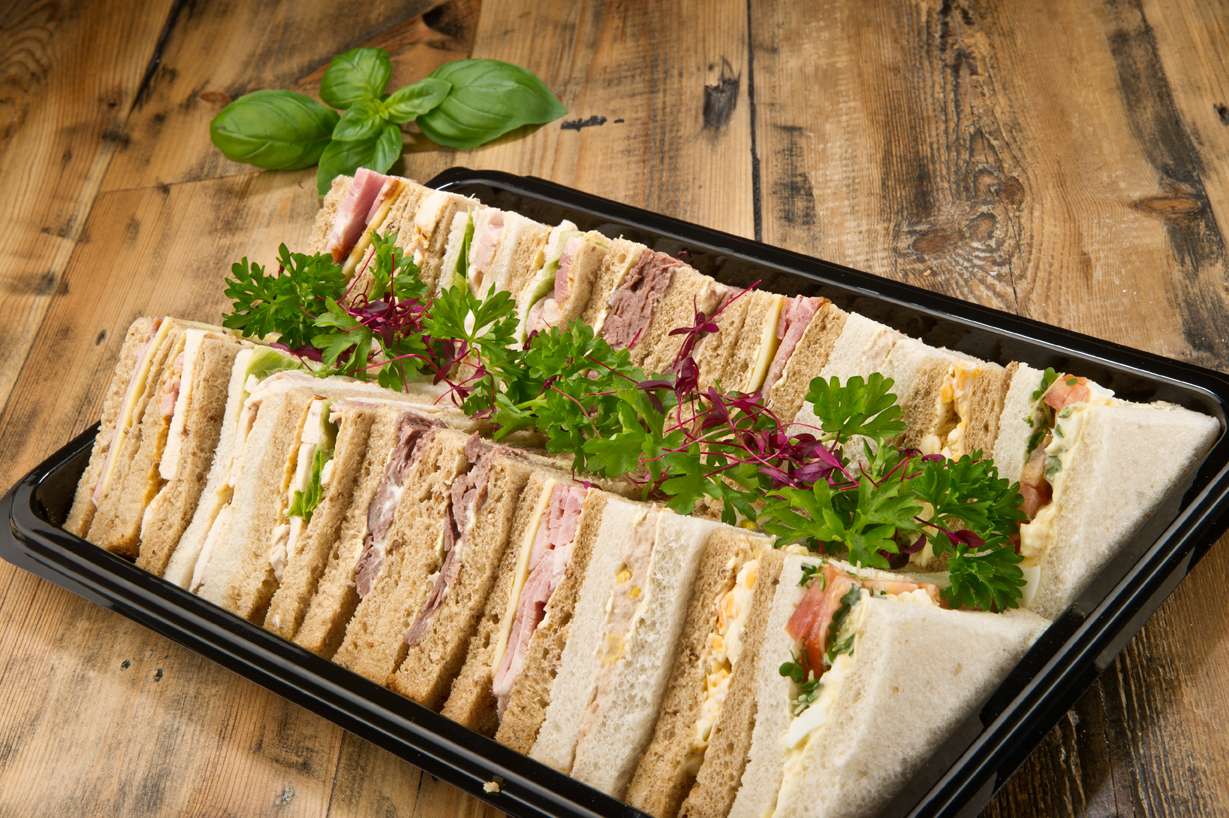
For most business meetings, the best food to order is a selection of sandwiches, rolls, wraps or other easy-to-eat buffet food, with a mixture of fillings and clearly identified vegetarian, vegan and other required dietary options. For morning meetings, breakfast catering such as pastries, fruit and hot breakfast rolls can work particularly well, while longer meetings and training days usually need a more substantial lunch. The right choice ultimately depends on the time of day, number of people attending, length of the meeting and whether guests will be eating while they work or taking a proper break.
It sounds like a simple decision, but food can have a surprising influence on how a business meeting feels.
Order too little and people spend the final hour thinking about being hungry. Order too much and you’re left wondering what to do with several untouched platters. Choose food that’s awkward to eat and suddenly everyone is attempting to discuss next year’s strategy while negotiating something that requires a knife, fork and considerable concentration.
Good meeting catering should do almost the opposite. It should make the day easier without demanding much attention itself.
What Makes Good Food for a Business Meeting?
Good business meeting food should be easy to serve, straightforward to eat, suitable for the setting and varied enough to accommodate different tastes and dietary requirements. For most meetings, food that can be picked up individually and eaten without complicated serving works particularly well.
This is why sandwiches, rolls, wraps and similar buffet-style options remain so popular in corporate catering. They aren’t simply convenient for the caterer. They’re convenient for the people attending.
Someone can take what they want without holding up everyone else. Portions are easy to manage. People can continue talking while they eat and, importantly, lunch doesn’t need to become an event in itself.
There are occasions when a more substantial or elaborate menu is entirely appropriate, particularly for celebrations or larger corporate events. For an ordinary business meeting, however, practicality is often underrated.
If the catering allows the conversation to continue naturally, it is probably doing its job well.
What Should I Order for a Morning Meeting?
For a morning business meeting, breakfast catering usually works best, with options such as pastries, fresh fruit, fruit juice, tea and coffee or hot breakfast rolls for a more substantial meal. The earlier the meeting and the longer it lasts, the more important it becomes to provide something filling rather than refreshments alone.
An 8am meeting feels very different when breakfast is waiting.
People may have left home earlier than usual, travelled some distance or skipped their normal breakfast to arrive on time. Offering food acknowledges that without making a great fuss about it.
For shorter meetings, pastries, fruit and drinks may be perfectly sufficient. If people are gathering first thing for a longer strategy session or training day, something more substantial is likely to be appreciated.
Breakfast can also change the atmosphere of a meeting. There is something naturally informal about arriving, pouring a coffee and choosing something to eat before sitting down. Conversations often begin before the formal agenda does, which can be particularly valuable when bringing together colleagues who don’t see each other every day.
What Should I Order for a Lunchtime Business Meeting?
For a lunchtime business meeting, choose food substantial enough to replace lunch but light and convenient enough that people can comfortably continue working afterwards. A varied cold buffet or selection of sandwiches, wraps, rolls and accompanying items is usually a practical choice.
Lunch is where the purpose of the meeting becomes particularly important.
If everyone has a genuine lunch break, you have considerably more flexibility. If food will be eaten around a boardroom table while discussions continue, simplicity matters.
This is not necessarily the moment for food that drips, crumbles excessively or requires elaborate cutlery. Nobody wants to meet an important new client while wondering whether half their lunch has landed on their shirt.
There is also a balance to strike between providing a satisfying meal and overwhelming people with food. An enormous, heavy lunch immediately before two hours of presentations may not create quite the afternoon energy you were hoping for.
The aim should be for people to return to the discussion satisfied rather than defeated by lunch.
What Should I Order for an All-Day Meeting or Training Day?
For an all-day business meeting or training event, plan catering across the whole day rather than thinking only about lunch. Breakfast or arrival refreshments, a substantial but not overly heavy lunch, drinks and afternoon refreshments can help break up a long day and keep delegates comfortable.
This is where catering becomes part of the timetable.
People arriving in the morning may appreciate coffee and something light to eat. Lunch provides an important mental break after several hours of concentration. Later in the afternoon, refreshments can give everyone another opportunity to step away from the presentation and reset.
Food can also help keep the event running to schedule.
If lunch is already waiting when the morning session finishes, people don’t need to leave the venue individually in search of somewhere to eat. Conversations continue, delegates remain together and the afternoon can begin at the planned time.
For organisers, that can be every bit as valuable as the food itself.
What Food Should I Order for a Client Meeting?
For a client meeting, choose professional, neatly presented catering that is easy to eat and offers guests a reasonable selection without overwhelming them with choice. The food should reflect the standard of hospitality you want your business to convey.
Client catering doesn’t need to be extravagant.
In fact, trying too hard can sometimes be less effective than simply doing the basics extremely well.
Food arriving on time, looking fresh and well presented, with dietary requirements already considered, communicates organisation and attention to detail. Those things matter because the catering becomes part of the wider experience of visiting your business.
Clients probably won’t leave saying that the sandwiches were arranged particularly neatly.
They may, however, leave with the impression that everything felt organised and professional.
That’s the more important outcome.
How Do I Cater for Different Dietary Requirements?
Ask attendees about dietary requirements before placing the catering order and make sure suitable choices are clearly identifiable when the food is served. Vegetarian and vegan requirements, allergies and other dietary needs should be considered as part of the main order rather than treated as a last-minute addition.
This matters increasingly as meeting sizes grow.
For a small internal meeting, you may already know everyone’s requirements. When clients, candidates or delegates are attending, it’s much safer to ask.
There is also an important difference between technically providing an alternative and genuinely catering for someone.
Nobody particularly enjoys watching everybody else choose from an extensive buffet while being handed one lonely item that has been set aside for them. Where possible, thoughtful corporate catering should make dietary requirements feel normal rather than inconvenient.
It is a relatively small detail that can make somebody feel considerably more welcome.
Should I Order Hot or Cold Food for a Business Meeting?
Cold catering is usually the simplest option for meetings where convenience, flexible serving times and minimal disruption are priorities, while hot food can work well when attendees are taking a defined meal break and the venue is suitable for serving it.
Neither is inherently better.
The question is what works for the meeting.
Cold buffet-style catering offers flexibility. If a presentation runs ten minutes over, lunch is unlikely to become a logistical problem. Guests can usually serve themselves quickly and there is less equipment to consider.
Hot food can create a more substantial dining experience, but serving times, available facilities and the structure of the event become more important.
A useful rule is to work backwards from what attendees will actually be doing when the food arrives. If everyone is expected to continue discussing business around a meeting table, convenience should probably win.
How Much Variety Should I Provide?
For most business meetings, provide enough variety for guests to have a genuine choice without ordering so many different options that significant food is left over. The larger the meeting, the more variety you will generally need.
Choice is important, but more isn’t automatically better.
For ten people, a carefully selected range can work perfectly well. For 50 people, tastes and dietary requirements will naturally be broader, so the menu needs to reflect that.
The objective isn’t to recreate a restaurant menu in the meeting room. It is to make it reasonably easy for everybody attending to find something they will enjoy.
This is one of the areas where an experienced business caterer can be particularly helpful. Rather than guessing how many varieties are necessary, the order can be planned around the number of people attending and the type of event.
When Should the Catering Arrive?
Business catering should normally arrive with enough time for it to be set out before the planned break, rather than arriving at the exact moment everyone expects to eat. The precise timing depends on the food, venue and size of the event.
For a small meeting, this might be relatively straightforward. For larger events, setup needs to become part of the schedule.
Ideally, the person organising the meeting shouldn’t have to leave halfway through an important discussion because the food has arrived downstairs.
Planning delivery around the agenda makes the catering feel seamless. Lunch is simply there when people need it.
That is particularly important for client meetings, conferences and training days where delays can have consequences for everything scheduled afterwards.
Choosing Business Meeting Catering in Manchester and Liverpool
For businesses looking for meeting catering in Manchester, corporate catering in Liverpool or business catering across the wider North West, the best menu will always be the one that suits the people, the venue and the purpose of the meeting.
There is no single lunch that works for every occasion.
A breakfast meeting for eight senior managers needs something different from a training day for 40 employees. A client presentation has different priorities from an informal team workshop. A two-hour meeting might need nothing more than refreshments, while an all-day event needs catering to be considered from arrival through to the afternoon.
The important thing is not to make food more complicated than it needs to be.
Choose food that people will enjoy, make sure there is enough of it, consider dietary requirements beforehand and select something appropriate for the way the meeting will actually run.
Good corporate catering shouldn’t interrupt a successful meeting.
It should make having one easier.