




There comes a point in every growing business when buying lunch from the supermarket stops being the easiest option.
Most companies begin in exactly the same way.
The meeting is arranged, someone offers to collect lunch on the way in, and a supermarket sandwich platter feels like the obvious solution. It is quick, familiar and perfectly adequate when meetings are occasional and guest numbers are small.
For many businesses, there is absolutely nothing wrong with that approach.
The interesting part comes later.
As organisations grow, meetings become more frequent, clients visit more often and teams spend increasing amounts of time collaborating in person. Gradually, almost without anyone noticing, the supermarket platter begins to create more work than it saves.
It is rarely one dramatic moment that prompts the change. Instead, it is a collection of small frustrations that quietly accumulate until professional corporate catering becomes the simpler option.
Growth Changes More Than Your Team Size
Success has a habit of changing everyday routines.
A business that once held one meeting each month may now host weekly management meetings, client presentations, recruitment interviews, training sessions and collaboration days. The diary becomes fuller and expectations become higher.
At the same time, the person responsible for organising those meetings usually acquires a longer list of responsibilities as well.
Collecting lunch no longer feels like a minor errand. It becomes another interruption in an already busy day.
Forty-five minutes disappears surprisingly quickly when someone leaves the office, finds parking, queues at the supermarket and returns carrying enough food for a meeting. It is time that rarely appears in anyone’s calendar, yet almost every business pays for it.
Professional business catering removes that hidden cost. Food arrives when it is expected, prepared specifically for the meeting, allowing everyone to concentrate on the reason they gathered in the first place.
Consistency Becomes Increasingly Important
Supermarkets are designed to serve thousands of customers every day. Their priorities are understandably different from those of a business hosting an important client meeting.
Sometimes the shelves are fully stocked. Sometimes they are not.
The wraps that were available last week have disappeared. The vegetarian selection is smaller than expected. The drinks you planned to buy have sold out. None of this reflects poorly on the supermarket. It simply reflects the nature of retail.
Business meetings, however, often demand consistency.
When clients visit your office, you want to know exactly what will be arriving. When senior colleagues are attending a board meeting, you do not want lunch to depend on whatever happens to be available at midday.
Professional corporate catering offers certainty. The menu you order is the menu that arrives, presented professionally and prepared specifically for your event.
That reliability becomes increasingly valuable as businesses grow.
Modern Workplaces Expect Greater Flexibility
The workplace itself has changed considerably over the past decade.
Teams are more diverse than ever before, bringing with them a wider range of dietary requirements and personal preferences. Vegetarian, vegan, gluten free and halal options have become everyday considerations rather than exceptional requests.
Trying to accommodate everyone while standing in front of a supermarket meal deal cabinet is rarely straightforward.
Professional caterers approach this differently because accommodating different requirements is simply part of what they do. Rather than treating dietary needs as complications, they build them into the planning process from the very beginning.
The result is not only better organisation but a better experience for everyone attending the meeting.
Presentation Quietly Influences Perception
One aspect of corporate catering that is often underestimated is presentation.
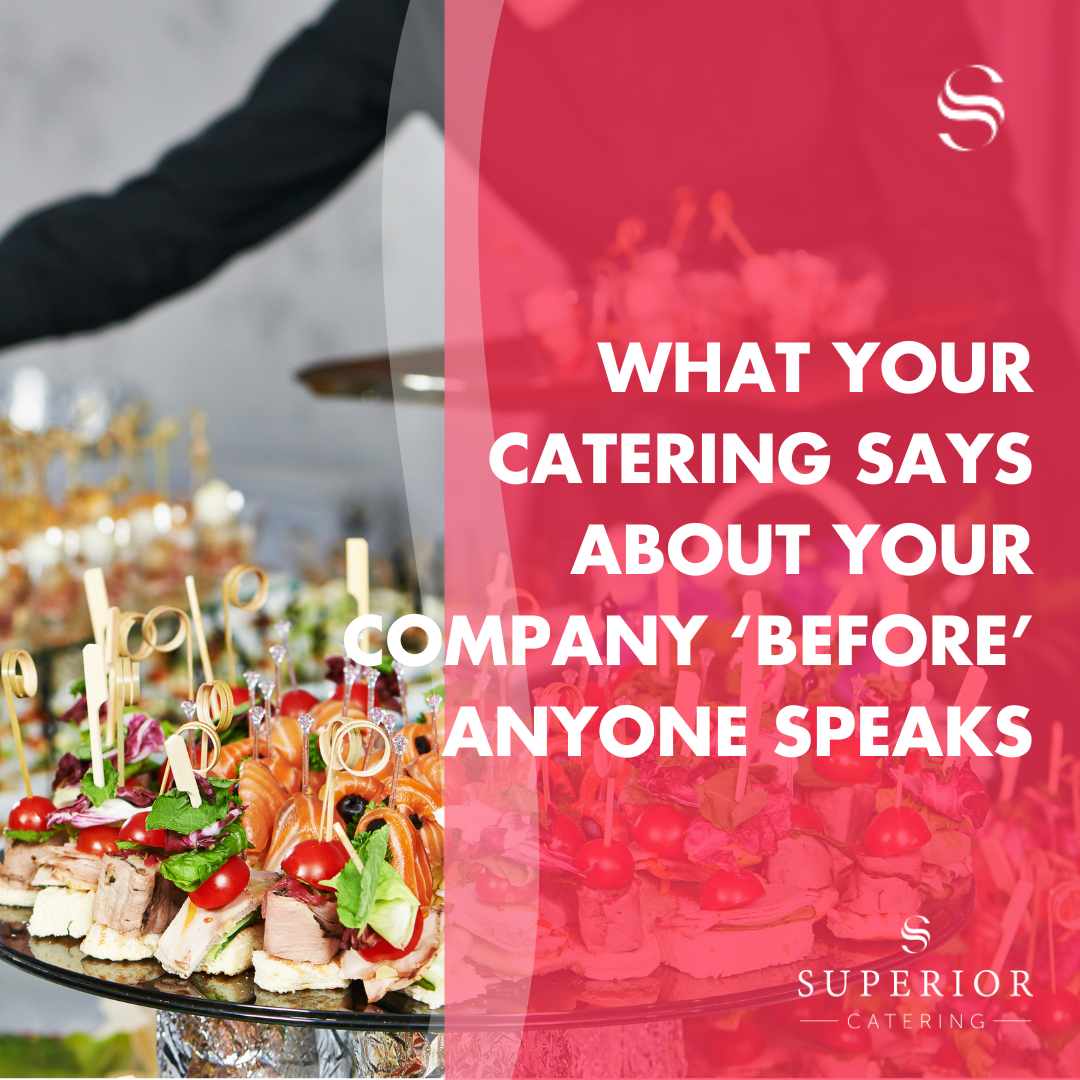
Food rarely becomes the main topic of conversation during a meeting, but people notice it nonetheless. Neatly arranged platters, clearly labelled dietary options and professional presentation all contribute to an impression that the event has been thoughtfully organised.
The opposite is equally true.
Plastic supermarket packaging spread across a meeting table can unintentionally undermine the professionalism that businesses work so hard to establish elsewhere. It may seem like a small detail, yet business relationships are often shaped by collections of small details rather than single grand gestures.
Presentation does not need to be extravagant. It simply needs to demonstrate care.
That care reflects positively on the organisation hosting the meeting.
Convenience Looks Different Today
Perhaps the biggest change is not the food itself but how easily professional catering can now be arranged.
Many people still imagine corporate catering as something reserved for large conferences or formal events, involving numerous phone calls and complicated planning.
The reality is very different.
Today, businesses can order catering online in a matter of minutes, choosing menus, confirming numbers and specifying dietary requirements through simple online ordering systems. The administrative burden has largely disappeared, making professional catering accessible for everyday meetings as well as major corporate events.
In many respects, arranging business catering is now no more complicated than ordering office stationery.
It’s Often a Sign That Your Business Has Grown
Moving away from supermarket platters is rarely about spending more money on lunch.
It is usually a reflection that the business itself has evolved.
Meetings matter more.
Clients visit more frequently.
Employees spend more time collaborating.
Professional standards become increasingly important.
The systems that worked perfectly well for a small team naturally begin to change as the organisation grows.
For businesses across Manchester, Liverpool and the wider North West, professional corporate catering has become part of that evolution. It removes unnecessary administration, creates a better experience for employees and visitors alike and allows organisations to focus on what really matters.
Sometimes the clearest sign that a business is growing is not a larger office or a bigger team.
Sometimes it is simply the moment when nobody has to ask, “Who’s going to nip to the supermarket?”